
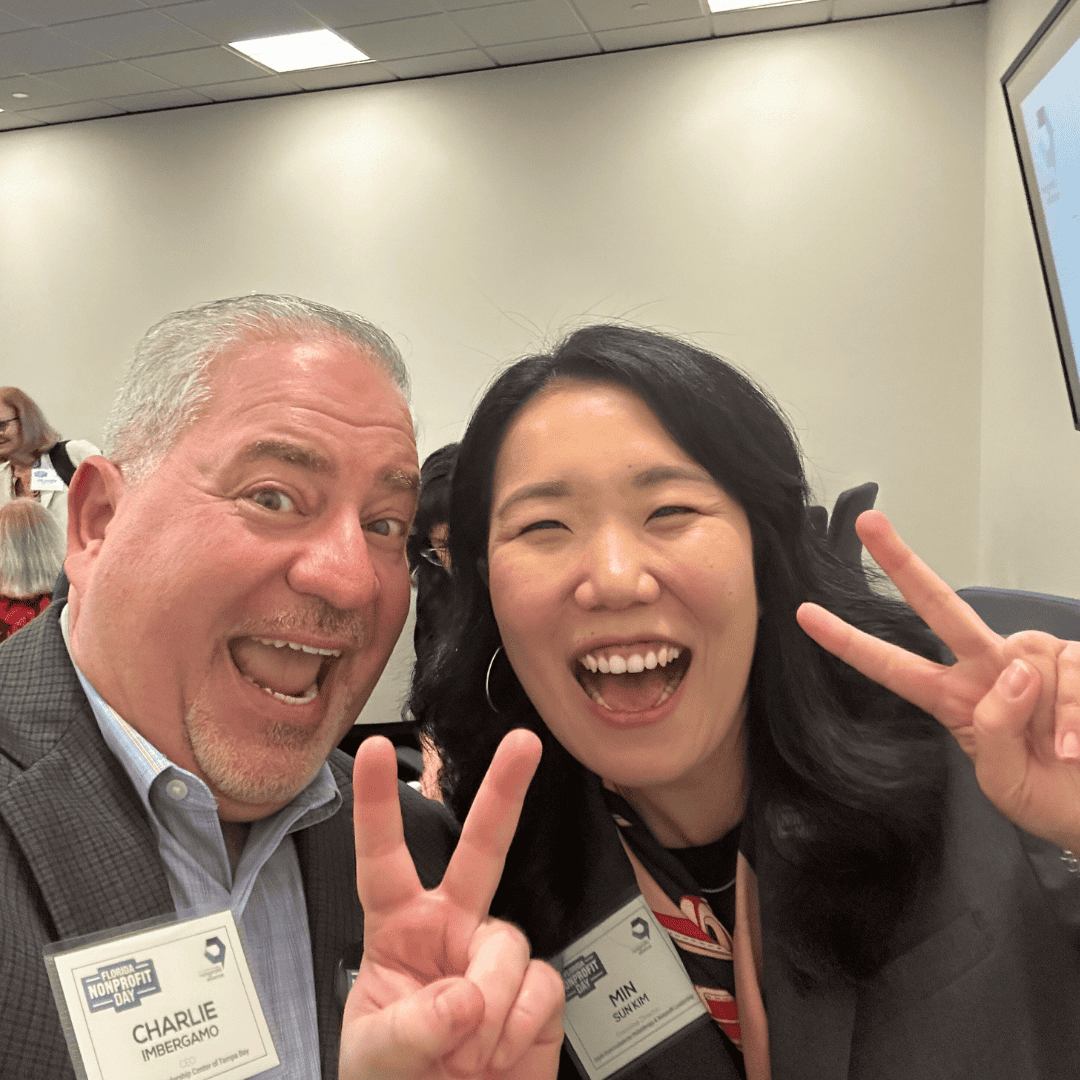
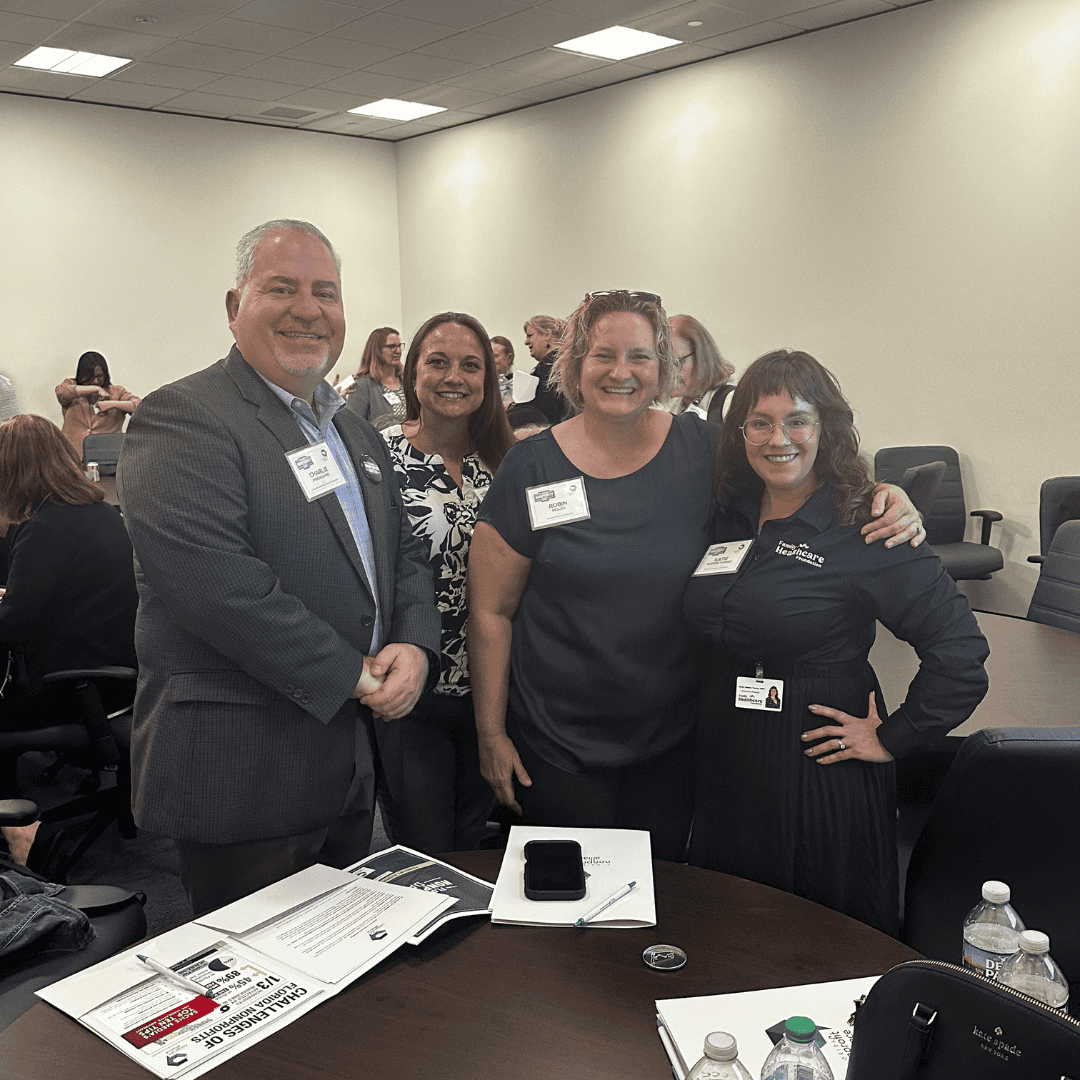
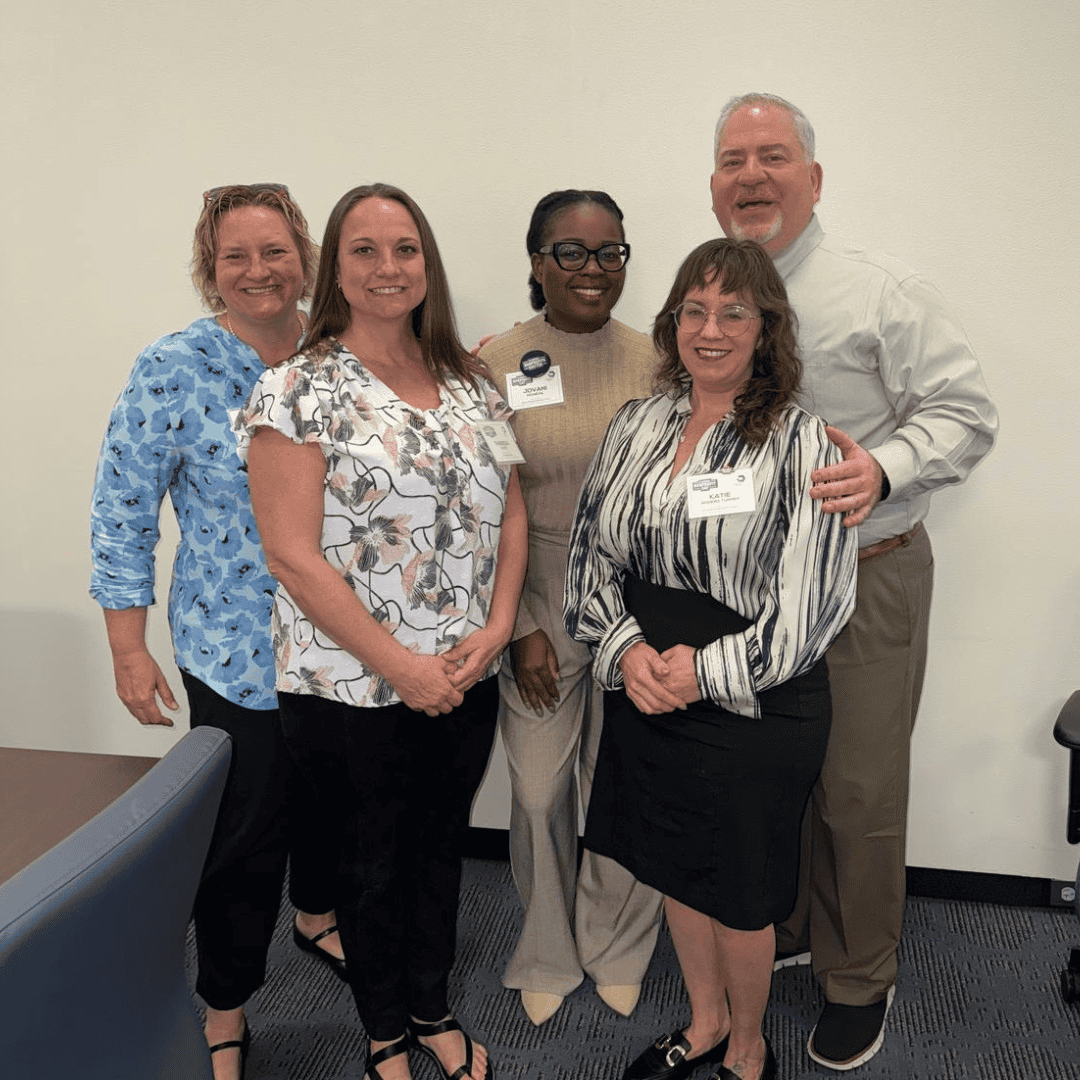
This week, the Nonprofit Leadership Center (NLC) participated in the Florida Nonprofit Alliance’s first-ever Nonprofit Day in Tallahassee (February 11-12, 2025) to reinforce the vital role nonprofits play in Florida’s economy and communities. Nonprofit leaders from across the state came together to meet with legislators to explain the strength and needs of nonprofits and advocate for policies that will advance and strengthen the nonprofit sector.
What Lawmakers Need to Know
It is essential that policy-makers and legislators understand the critical impact nonprofits have and the challenges they face. Consider these facts based on recent research from the Florida Nonprofit Alliance (FNA). They’ve even provided downloadable infographics to help in having conversations with your network and community influencers.
Economic Impact of Nonprofits in Florida
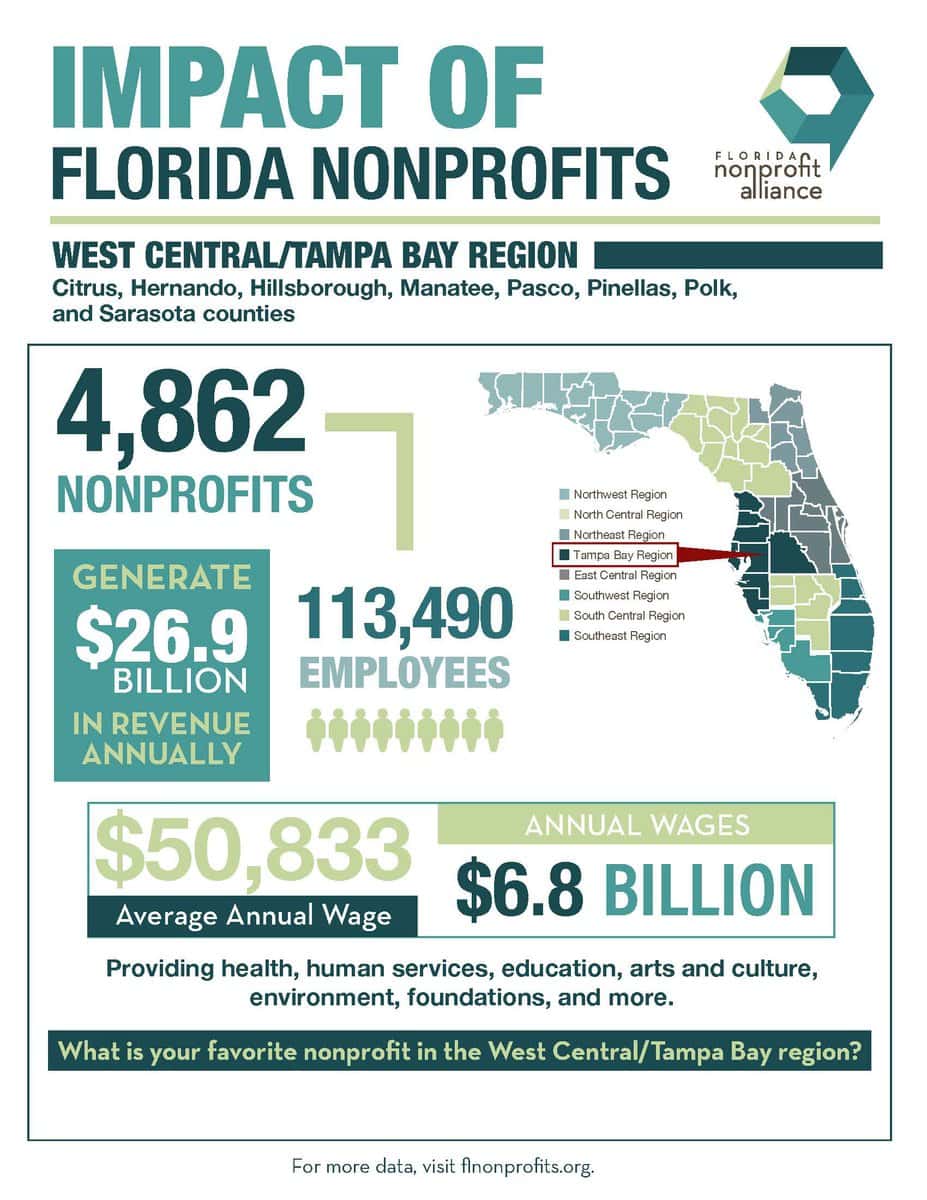
- Florida’s nonprofit sector provides a payroll of $27.5 billion to employees annually, employing 7% of the state’s workforce. That is comparable to the construction and manufacturing industries.
- Nonprofits generate $116 billion in revenue for the state. The sector is integral to Florida’s continued economic growth and diversification.
- 450,000 Floridians rely on the nonprofit sector for their livelihoods.
- Florida has one of the fastest-growing populations in the nation, but the sector’s growth is not on par with the state’s growth, indicating the need for investment.

Challenges Facing Nonprofits
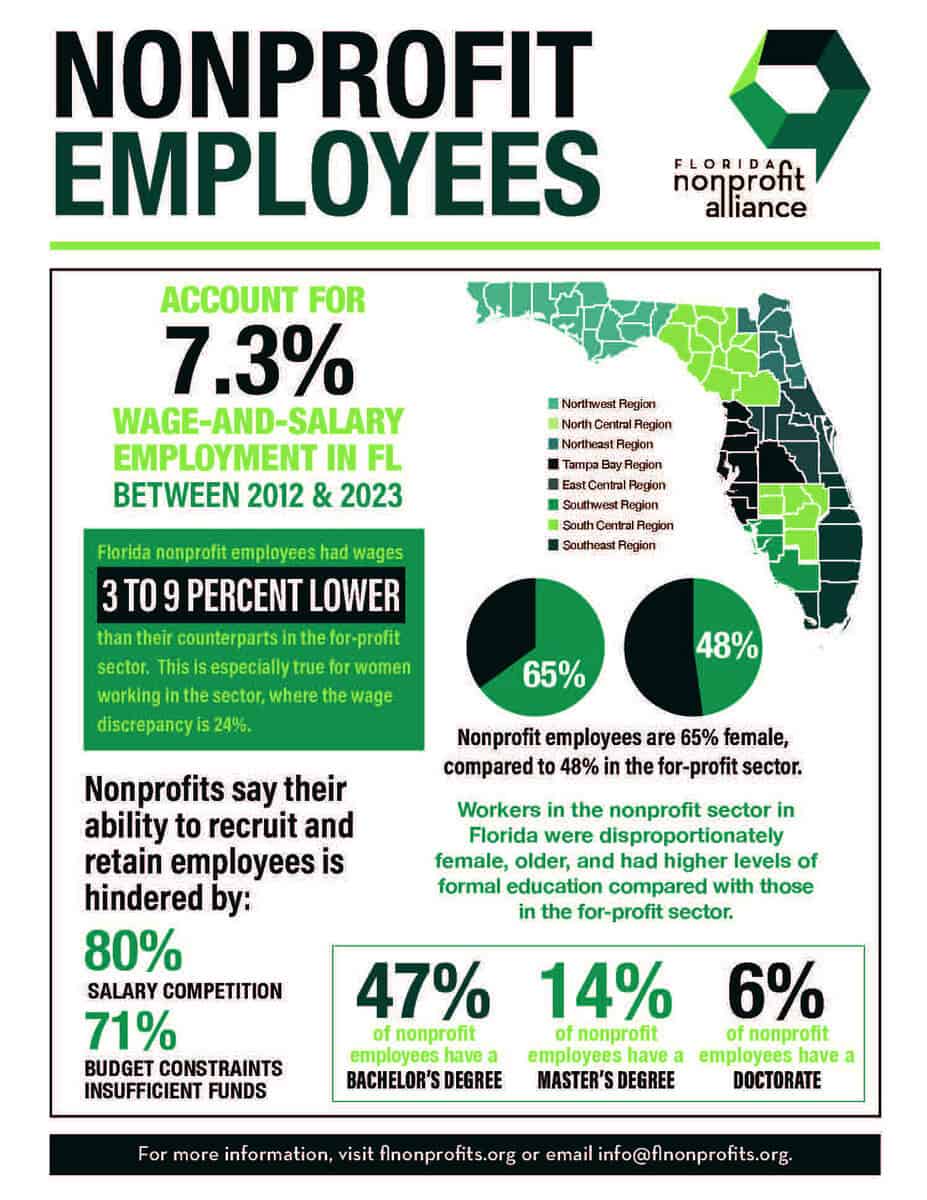
- More than 1 in 5 nonprofit workers (22%) are living paycheck to paycheck. Florida nonprofit employees had wages that were up to 9% lower than their counterparts in the for-profit sector. This is especially true for women working in the sector, where the wage discrepancy is 24%. The sector needs flexibility in grants to help retain staff.
- 26% of nonprofits have experienced an increased demand for services, and 44% served more clients in 2024 than they did in 2023.
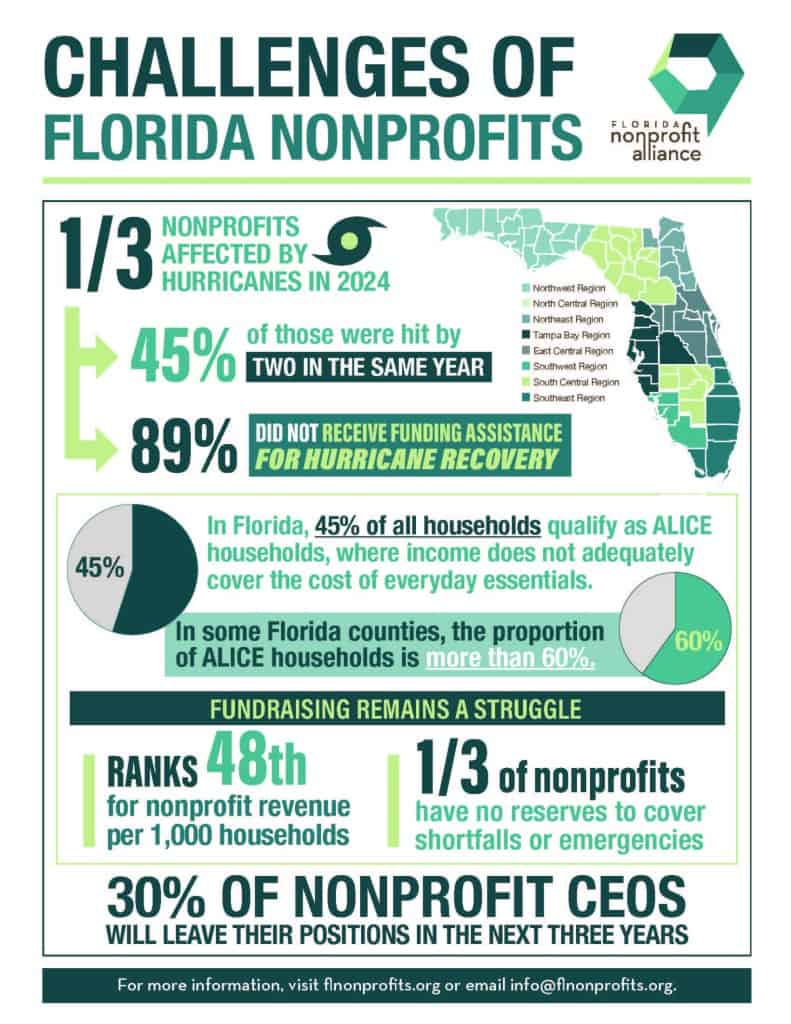
- Statewide, there are an average of 2.6 nonprofits per 1,000 households, ranking Florida as 48th among the 50 states and District of Columbia. In the top 10 counties where households at or below the ALICE threshold are most prevalent, the number of nonprofits per household notably decreases. These largely rural counties generally have the greatest need and generally require higher levels of nonprofit support.
- One-third of Florida’s nonprofits were affected by hurricanes in 2024. Forty-five percent of those were hit by two in the same year. Eighty-nine percent did not receive funding assistance for hurricane recovery. Nonprofits need to be able access resources just like other small businesses.
- One-third of Florida’s nonprofits have no reserves to cover shortfalls and emergencies.
In addition to these challenges, the Center for Effective Philanthropy’s 2024 State of the Sector report highlighted these top 10 concerns, themes we hear from the nonprofit professionals and organizations we work with on a daily basis:
- Burnout: Burnout remains a significant issue for nonprofit staff and leadership, with half of the leaders more concerned about their own burnout compared to last year.
- Financial stability: Most nonprofits reported either a balanced budget or a surplus in the last fiscal year, and a majority anticipate similar financial outcomes for the current fiscal year.
- Staffing challenges: Staffing continues to be a major concern, with nearly 60% of leaders identifying staff-related issues as one of their biggest challenges.
- Difficulty filling vacancies: About half of the nonprofit leaders reported having some to a lot of difficulty filling staff vacancies in the past year.
- Use of AI: More than half of the nonprofits surveyed are using artificial intelligence to supplement staff work, particularly in internal productivity, marketing, and fundraising.
- Funder commitments: The majority of nonprofit leaders report that funders are maintaining or making new commitments to change their grant making practices, such as reducing funding restrictions and streamlining processes.
- Racial equity: More than a third of nonprofit leaders note that their funders either have no commitments to advancing racial equity or have reduced or ended their commitments in the past year.
- Additional funding sources: Three-quarters of nonprofit leaders report receiving funding from donor-advised funds, and 40% received funding from intermediary grant makers or philanthropic collaboratives.
- Impact of burnout on mission: About three-quarters of leaders indicate that burnout among their staff is at least slightly impacting their organization’s ability to achieve its mission.
- Financial outlook: Leaders who experienced a surplus in the last fiscal year often cited higher than expected foundation revenue, while those with a deficit pointed to lower than expected individual giving and higher costs.
Elevating the Importance of Nonprofits in Tallahassee
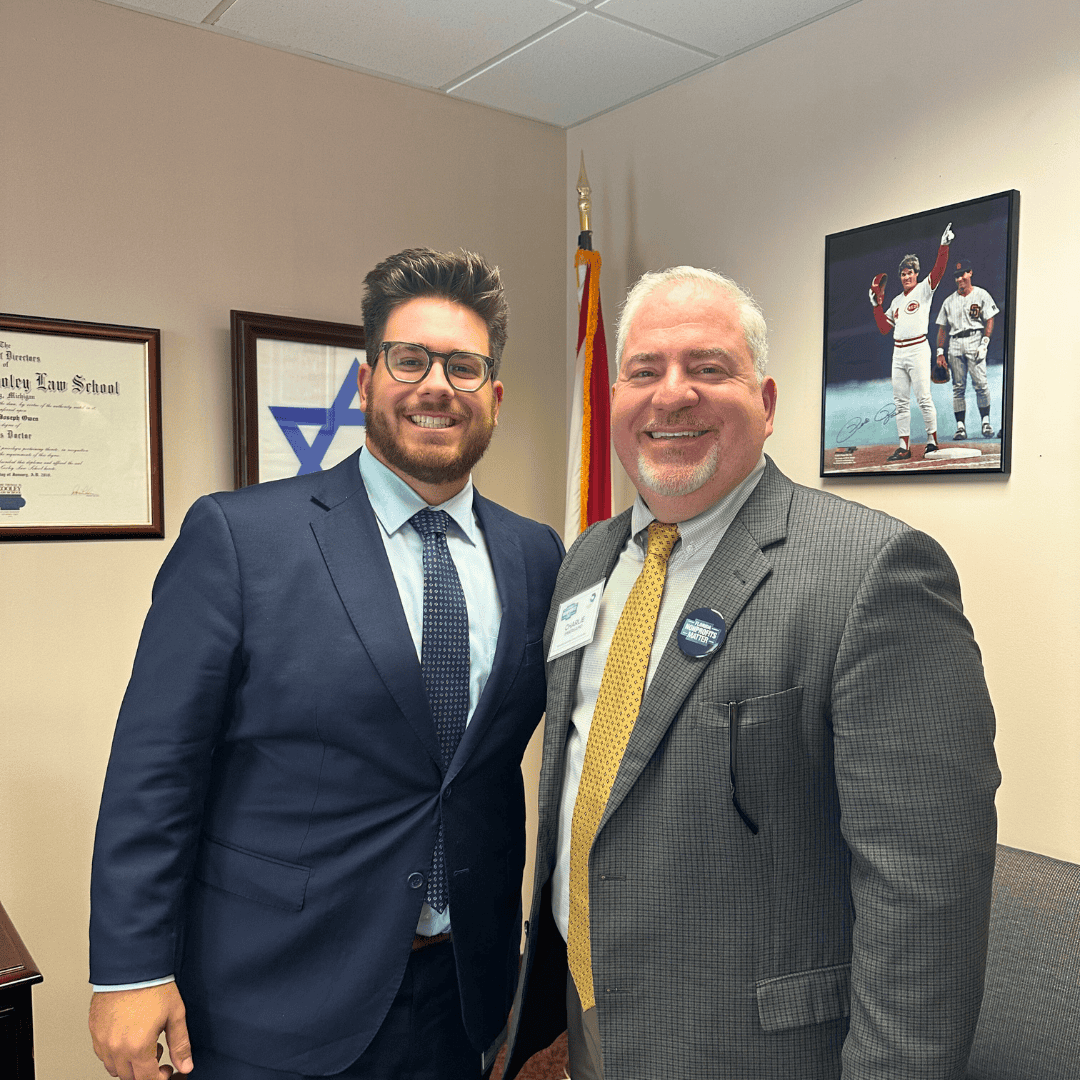
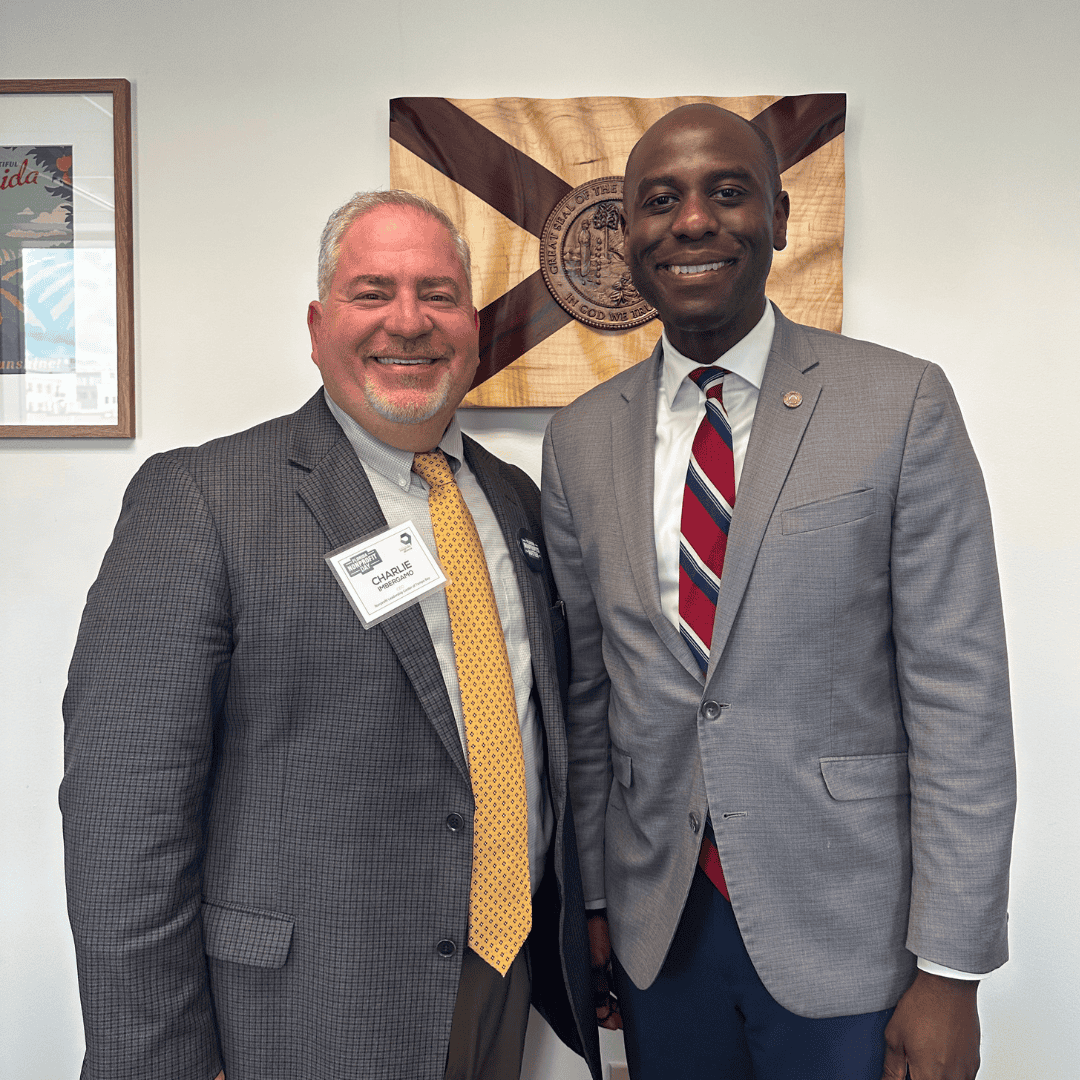
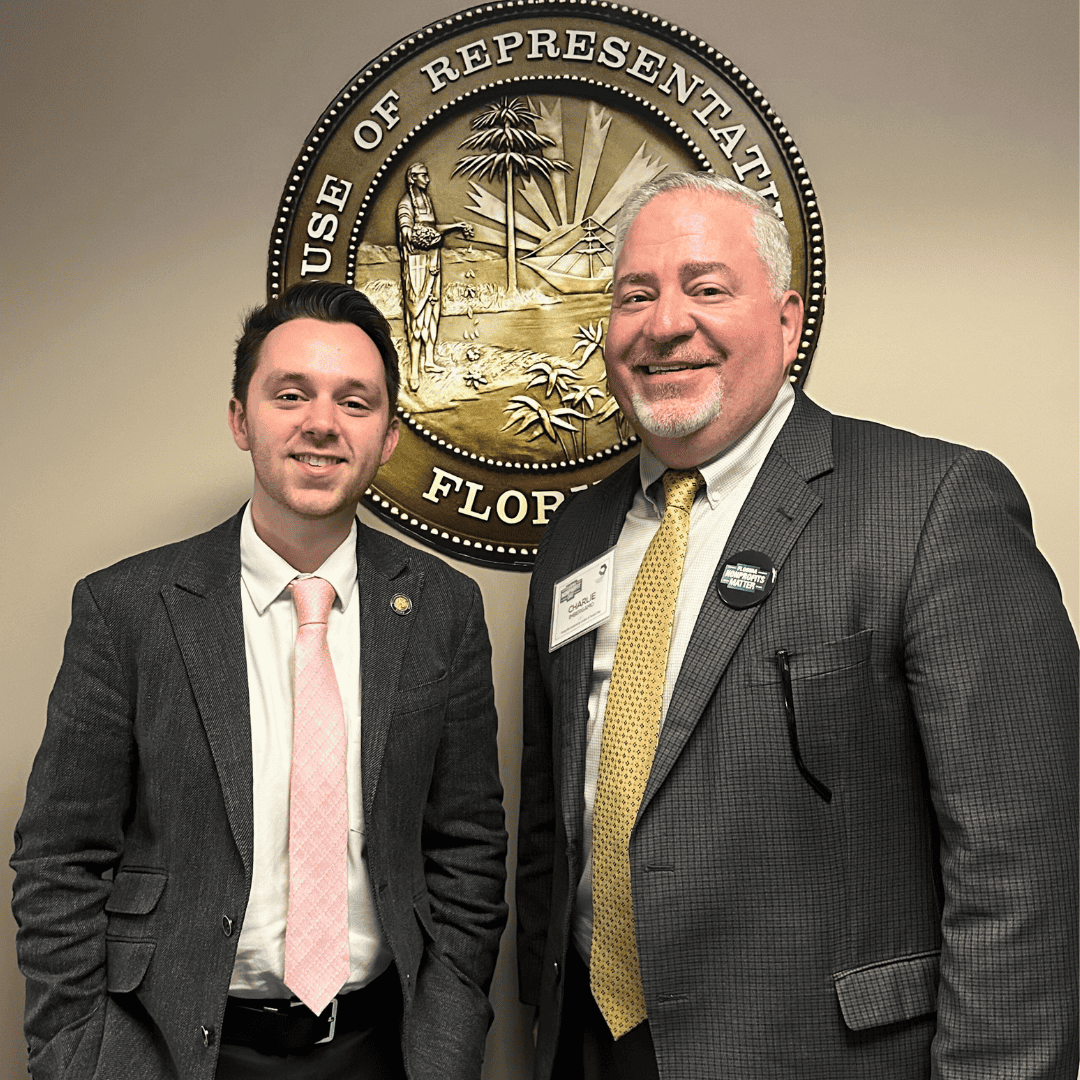
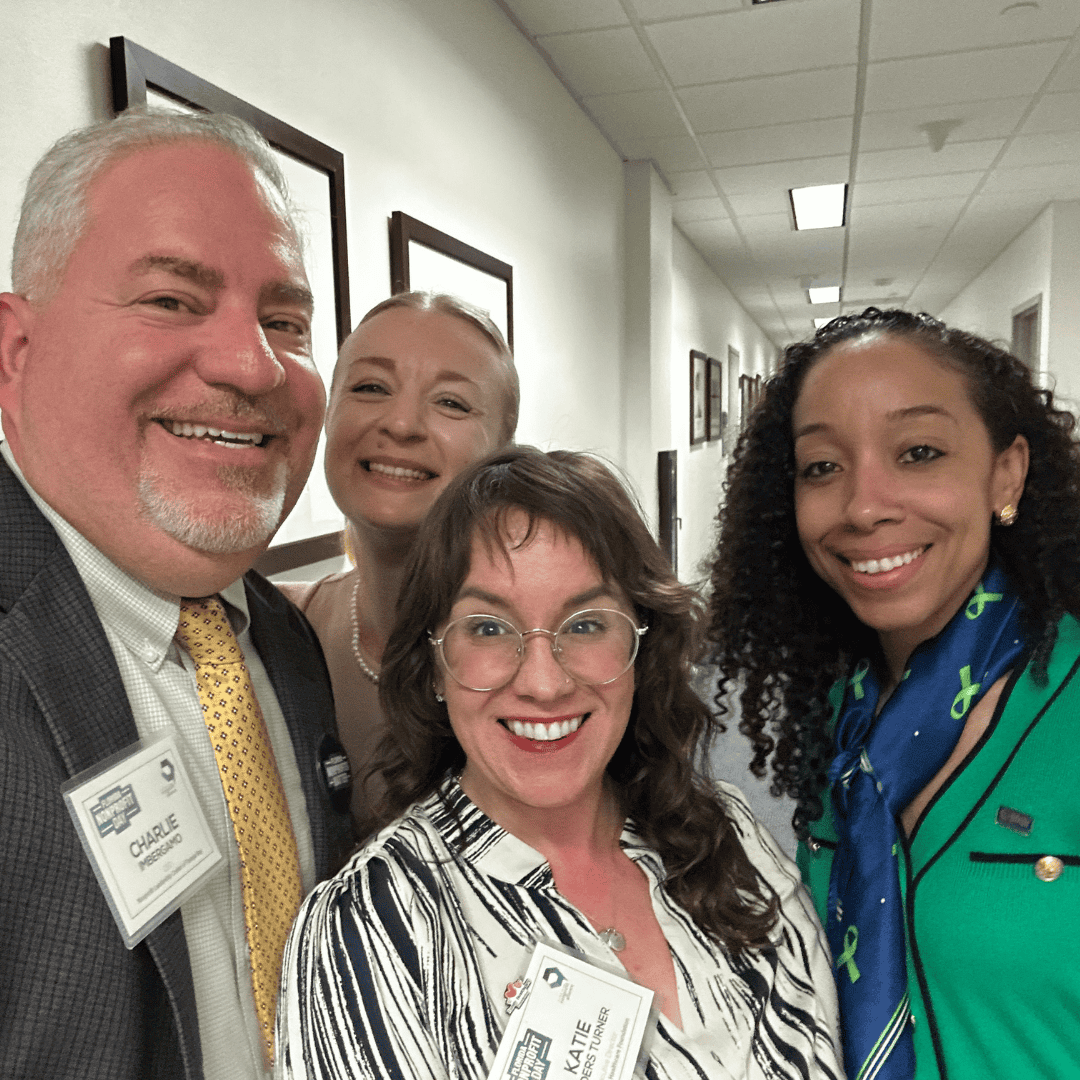
At the invitation of The Family Healthcare Foundation, the Nonprofit Leadership Center joined CEO Katie Roders Turner on visits to the following lawmakers. Other regional nonprofits in attendance included Abe Brown Ministries, NAMI Pinellas, Savior National Solutions, Seniors in Service, and Community Dental Clinic.
- Representative Jon Albert (R, Polk)
- Representative Kincart Jonsson (R, Polk)
- Representative Cross (D, Pinellas)
- Representative Jacques (R, Pinellas)
- Legislative aides of Representative Owen (R, Hillsborough), Representative Hart (D, Hillsborough), and Leader Driskell (D, Hillsborough)
We were encouraged to meet many people in the state capitol who know and appreciate the nonprofit sector’s value:
✅ Rep. Cross is a former nonprofit executive and graduate of NLC’s Certificate in Grant Writing.
✅ Rep. Owen is a nonprofit leader.
✅ Rep. Kincart Jonsson has experience serving on nonprofit boards.
✅ Rep. Jacques has participated in NLC programs and works for Big Brothers Big Sisters of Tampa Bay when not in Congress.
✅ The sister of Leader Driskell’s legislative aide (Zoe) is a recent graduate of NLC’s Certificate in Leadership program and works for St. Pete Free Clinic.





Key Takeaways
During our time in Tallahassee, five reflections were clear:
- Policymakers recognize nonprofits as economic drivers, employing 7% of Florida’s workforce.
- There’s a growing need to advocate for sustainable funding and workforce support, especially the process related to timely reimbursement from the State.
- Many nonprofits struggle with increased demand and limited resources with increased volatility from federal uncertainty.
- Cross-sector partnerships are essential for lasting impact.
- Local voices matter — our region’s leaders value nonprofit insights and desire deeper connection.
Potential Next Steps
As the Nonprofit Leadership Center considers potential next steps coming out of Nonprofit Day, here are two immediate action items we believe would be beneficial:
- Strengthen year-round advocacy efforts through education and training.
- Equip nonprofits with tools to engage policymakers effectively, in partnership with Florida Nonprofit Alliance and others in the region.